
The US government has been exploring different ways to add Bitcoin to its reserves in a budget-neutral manner, aiming to avoid direct taxpayer costs
President Trump has already established a Strategic Bitcoin Reserve via executive order, which is being initially funded by existing government Bitcoin holdings. The order explicitly states that the Treasury and Commerce Departments are authorized to develop budget-neutral strategies for acquiring additional Bitcoin, ensuring no incremental costs are imposed on American taxpayers.
It is anticipation that the US administration will make decisions in this area in the next 60 to 90-days.
Here are some of the key proposals being considered:
- Selling existing assets like gold: One idea is to sell off portions of existing US gold reserves to fund the purchase of Bitcoin. This approach leverages existing assets and wouldn’t require new taxpayer funding. An internationally aggressive approach offered is to revalue the US Gold reserve to present day prices, sell the gold and immediately buy bitcoin. In selling its gold reserve the price of physical gold would drop on both the news and the action of selling the gold, thus hurting other central banks reserve values, notably Russia and China. At the same time the apx. value from gold sales, estimated at $850 Billion at today’s prices, would drive bitcoin’s price higher establishing a strong backing for the US$. This is unlikely but is on the list of options.
- Utilizing tariff revenues: Another suggestion is to allocate a portion of the revenue generated from tariffs to acquire Bitcoin. This relies on existing government income streams and avoids increasing the national debt.
- Issuing Bitcoin-backed bonds: The government could explore creating and selling bonds backed by Bitcoin holdings. Investors would purchase these bonds, and a portion of the proceeds would be used to buy Bitcoin. I fully expect this to be implemented before year-end 2025. It would allow the USA to shift refinancing needs from every four to five years to 10-years, 20-years and even 30-year refunding and establish a fixed cost of borrowing. It would seem pension plans, Endowment funds, Insurance companies, Sovereign Wealth Funds and Mutual funds/ETFs.
- Leveraging Federal Reserve surpluses: Some proposals suggest revisiting policies that allowed the Federal Reserve to maintain larger surpluses, potentially using these funds to buy Bitcoin without requiring additional congressional appropriations.
- Including Bitcoin in IMF Special Drawing Rights (SDRs): A more ambitious idea involves convincing the International Monetary Fund (IMF) to incorporate Bitcoin into its Special Drawing Rights (SDRs), which are international reserve assets. If successful, this could formalize Bitcoin’s role as a global reserve asset and facilitate its acquisition by member nations.
- Selling surplus commodities: One unique idea suggested is to sell off existing surplus commodities, such as the government’s large stockpiles of cheese, and use the proceeds to purchase Bitcoin. This avoids direct taxpayer funding and helps manage excess inventory.
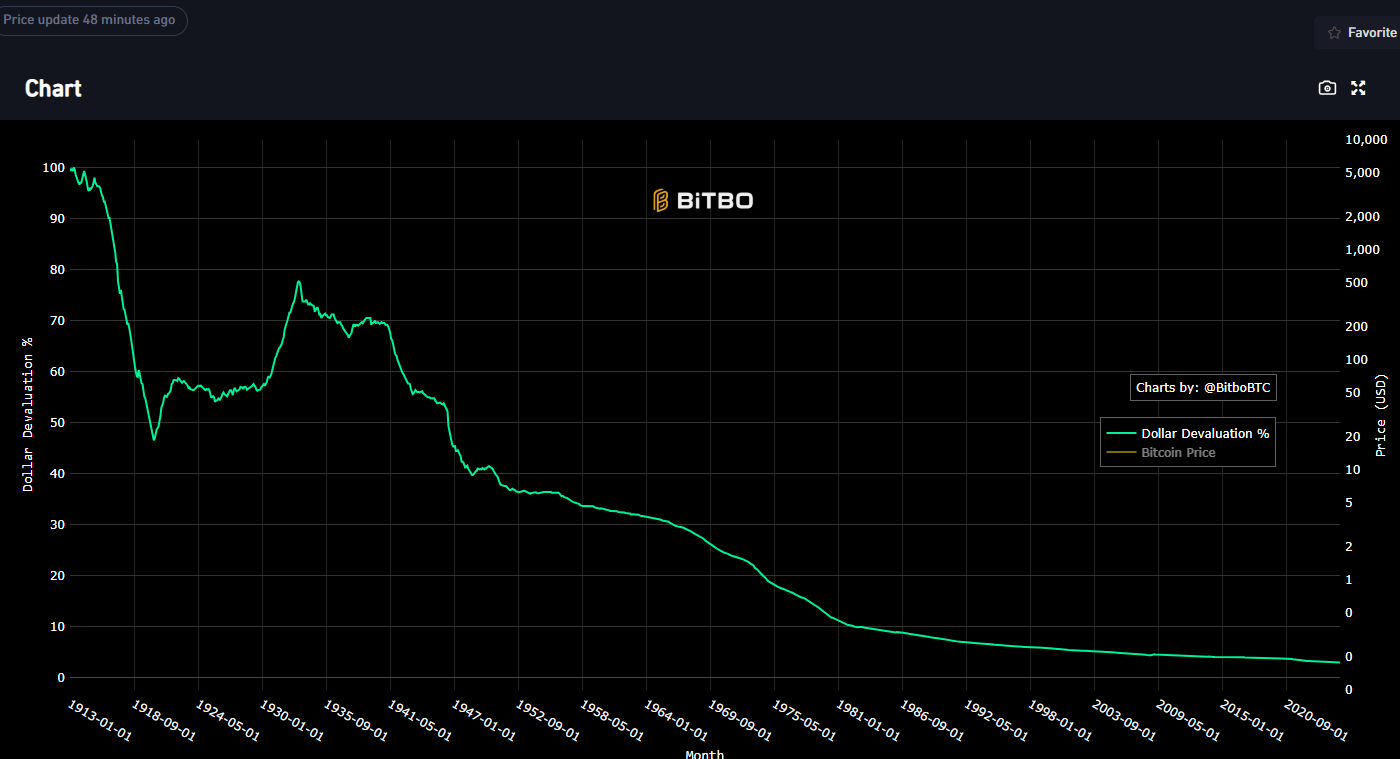
The US Dollar has been devalued 96.98% since the establishment of the Federal Reserve in 1913
$100 dollars in 1913 is worth $3.02 today, Aug 9th, 2025
.
Published at Tom’s Blog at www.LivingOffTheMarket.com August 11, 2025
#bitcoin #crypto #gold #stocks #qqq #stocksthatdouble